Rodenticide Resistance in House Mice: What Commercial Facilities Need to Know About Effective Rodent Control
A newly published study from Rutgers University is reinforcing a critical shift in commercial pest management: rodenticide resistance is widespread in house mouse populations across the northeastern United States.
Our Urban Entomology Lab contributed field-collected specimens to support this research, which analyzed genetic mutations linked to resistance in both house mice and Norway rats.
Key Findings from the Study
- 84% of house mice carried at least one genetic mutation
- Approximately 69% of mice had mutations associated with anticoagulant rodenticide resistance
- Multiple mutations were frequently observed, indicating increasingly complex resistance profiles
- Norway rats showed significantly lower levels of resistance-associated mutations
These findings confirm what many commercial pest management programs are already experiencing: traditional rodent control methods relying heavily on rodenticides are becoming less reliable—especially for house mice.
Why Rodenticide Resistance Matters for Commercial Facilities
For industries such as food processing, warehousing, healthcare, hospitality, and property management, ineffective rodent control presents more than an operational inconvenience—it creates risk:
- Regulatory and audit failures (SQF, BRC, AIB, FDA compliance)
- Brand and reputation damage
- Increased service frequency and cost without improved outcomes
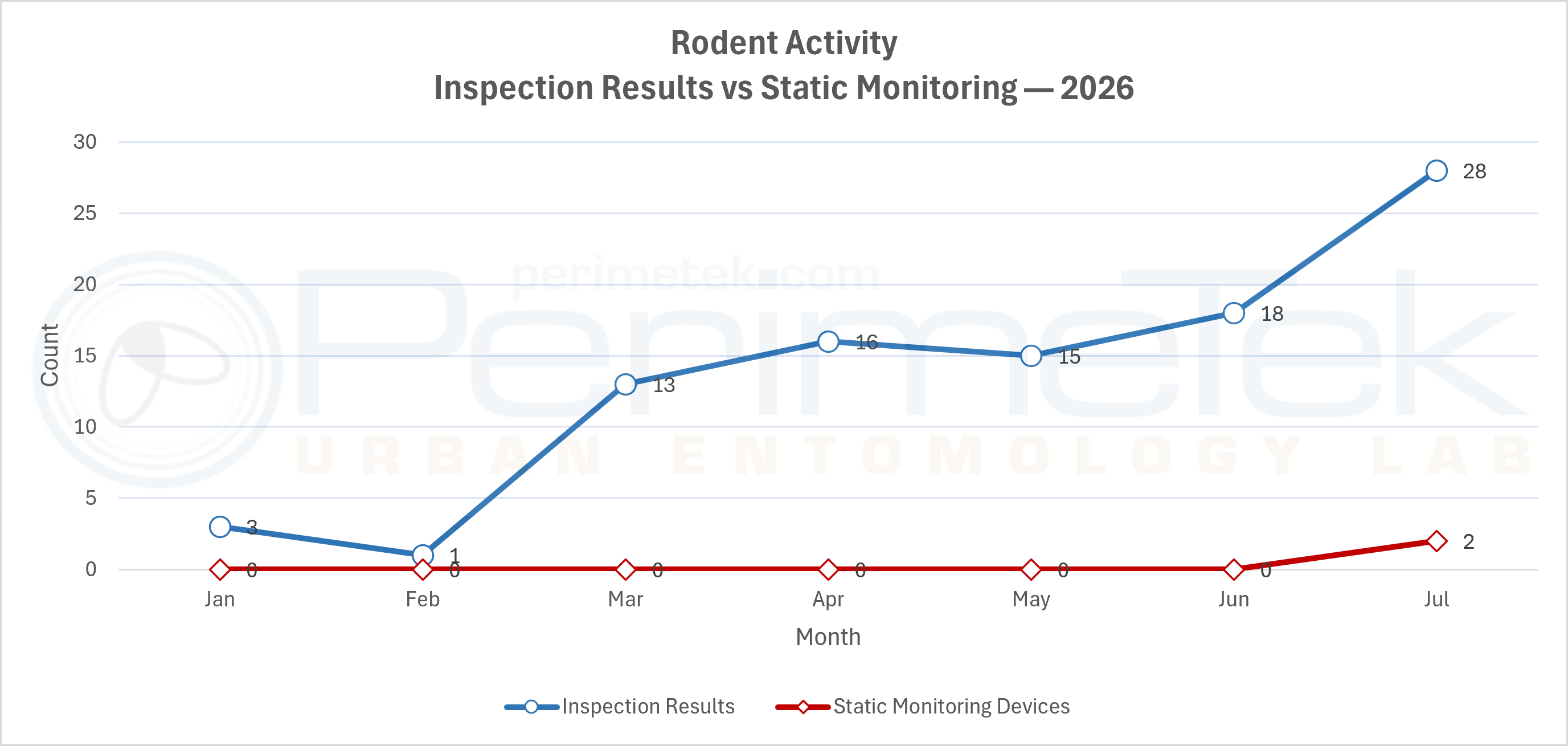
- Ongoing pest activity despite “active” programs
When resistance is present, repeated baiting does not solve the problem—it often masks it.
The Shift Toward Integrated Rodent Control
The study highlights the need to move beyond a rodenticide-dependent approach and toward a more effective, system-based strategy.
Modern commercial rodent control programs should emphasize:
- Exclusion – Sealing entry points to prevent rodent access
- Sanitation – Eliminating food and harborage conditions
- Monitoring and data analysis – Identifying trends and pressure points
- Targeted control methods – Using the right tools at the right time
- Program verification – Confirming that the system is working as designed
This aligns with a broader industry shift toward Integrated Pest Management (IPM) and more advanced, data-driven approaches.
What This Means for Your Pest Control Program
If your current program relies heavily on rodenticide baiting, it may not be addressing the underlying risk—particularly in environments where house mice are the primary concern.
The presence of resistance means that:
- More bait does not equal better control
- Program design matters more than product selection
- Prevention and system performance must be measured—not assumed
Moving Forward
Rodenticide resistance is not a future concern—it is already influencing outcomes in commercial environments.
The most effective pest management programs today are those that:
- Adapt to emerging data
- Reduce reliance on single-method control strategies
- Focus on long-term prevention and verification
Research like this provides a clearer picture of what is happening at the population level—and reinforces the importance of science-backed, professionally designed pest management systems.
If you’re evaluating your current rodent control program or preparing for an audit, now is the time to ensure your approach reflects these realities.