Proof of Service is Not Proof of Performance?
Are food safety facilities getting what they really need from their pest management programs?
Too often, the verification and reporting offered by traditional pest management programs amounts to little more than proof of service.
Proof that monitoring devices were inspected, pesticide applications were made, work orders were completed, and a technician showed up as scheduled.
There was a time when this represented a significant advancement in professionalism. Throughout the 1980s and 1990s, companies capable of delivering reliable service through trained technicians practicing Integrated Pest Management (IPM) were at the forefront of the industry.
But that was decades ago.
Today, much of the commercial pest management market continues to operate under this same model. This becomes problematic when facilities rely on these services as part of a preventive food safety system.
Service is Not Performance
Consider a typical pest management report documenting that50 rodent monitoring devices were inspected, three showed activity, and two structural deficiencies were identified.
This establishes that work was performed and observations recorded. But what does it tell us about program effectiveness?
Were the devices appropriately positioned? Was the monitoring frequency sufficient? Were the structural deficiencies corrected?Did those corrections produce the intended results?
Most importantly, is the facility becoming more or less susceptible to pest establishment and persistence?
A completed service report cannot, by itself, answer these questions.
Are We Measuring What Matters?
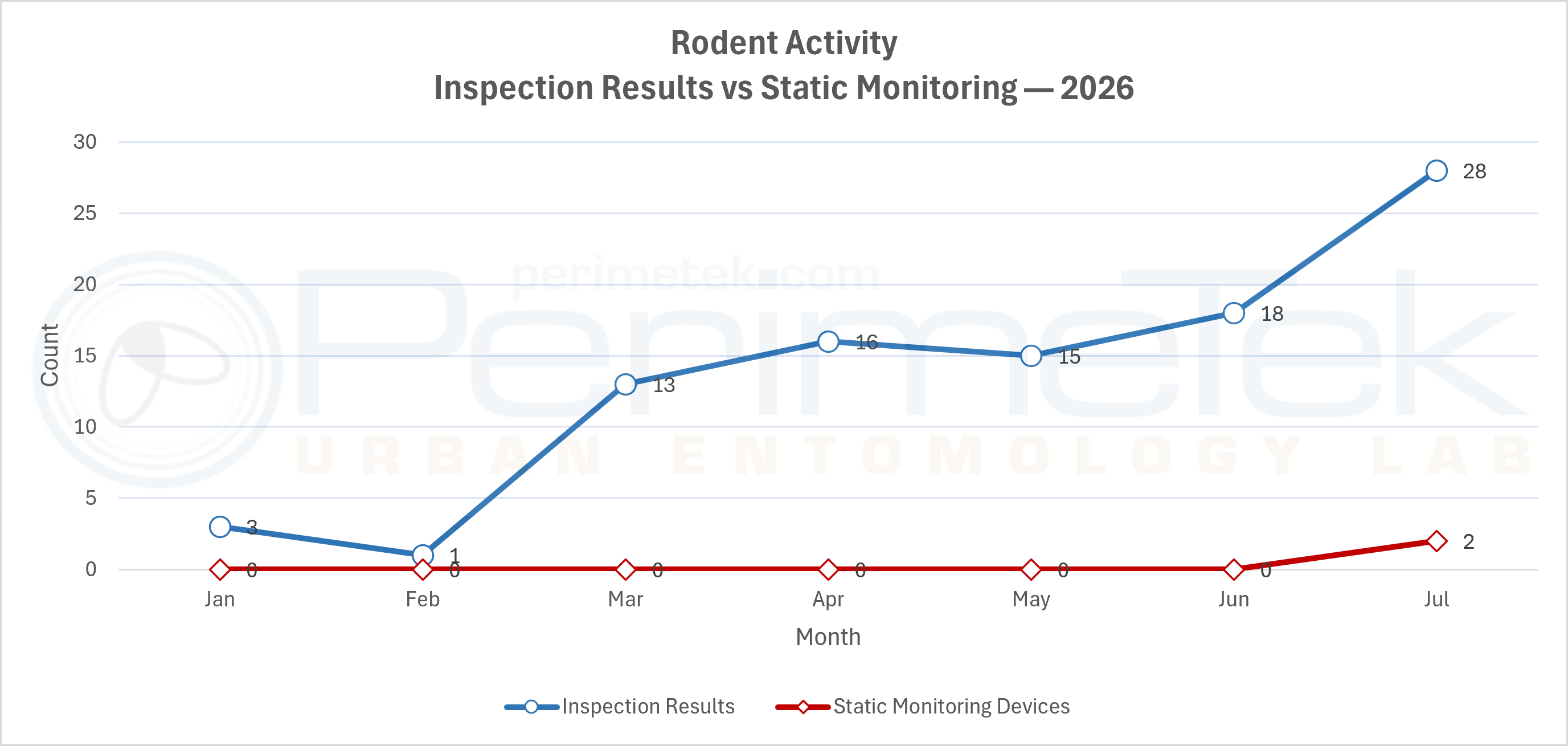
Digital reporting systems have dramatically improved our ability to collect pest management data. Yet collecting information and demonstrating effectiveness are two different things. Consider the common practice of interpreting declining pest counts as evidence of success.
Fewer captures may indicate an effective intervention, but they could also reflect changes in device placement, monitoring frequency,seasonal conditions, or pest behavior. Likewise, zero captures do not necessarily indicate zero activity. They may reflect limitations in the monitoring system itself.
Without understanding these variables, how confidently can we interpret the results?
What Are Facilities Actually Buying?
Traditional pest management agreements are largely structured around inputs: service frequency, labor, devices, and materials. Yet food safety facilities are ultimately purchasing something different: the prevention and management of biological hazards that threaten product integrity, regulatory compliance, and operational continuity.
Service activities are the means to that end, not the end itself. This distinction should influence how programs are designed,purchased, and evaluated. Rather than judging programs primarily by completed visits and documented activities, facilities should expect evidence of monitoring capability, effective interventions, corrective action follow-through, and continuous improvement.
Raising the Standard
The opportunity for our profession is to move beyond documenting activities toward demonstrating their value through meaningful analysis and verification.
Food safety facilities deserve answers to both.